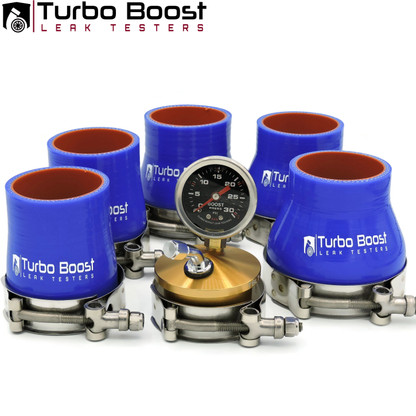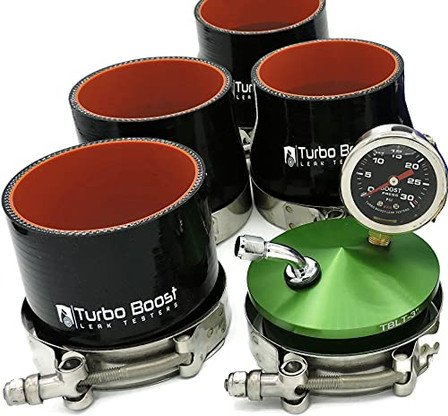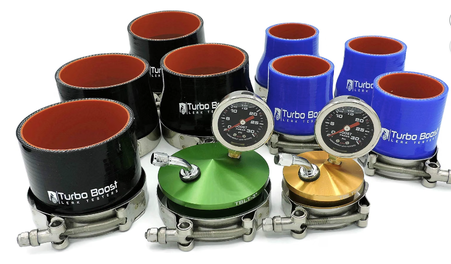
Thank you for supporting American small businesses! We really hope you are satisfied with your boost leak tester purchase and are always willing to support with product or technical information, and will work with you on any issues with your order. Questions about this product? Email support@turboboostleaktesters.com or call or text any time at 248-403-8512.
Text tech helpWith this boost leak tester you'll be able to pressurize and listen for leaks with the engine off, simulating the same conditions as the turbo spinning and making boost. Installing the tester kit on the turbo inlet or another convenient test location lets you pressurize the charge air path and test every connection that usually sees boost pressure — clamped connections, faulty intercoolers, BOV or bypass valve diaphragms, throttle body, weld joint cracks, injector seals, check valves, old & cracked hoses, vacuum lines, gasket and seal surfaces, plus many more.
A motor with boost leaks can cause a loss of fuel economy, check engine lights, increased intake temps, knocking, and offset air/fuel ratios. Depending on the size of the leak, overspinning the turbo to compensate can overwork the bearings, causing shaft play and ultimately turbo failure. Large leaks are obvious from whistling and power loss and get fixed quickly — but smaller leaks are the silent killers of turbo bearings, going undetected while destroying a turbo over time. Once the bearings are compromised (shaft play), the compressor or turbine wheel becomes imbalanced and starts contacting the housing, getting chewed up. Inevitable turbo replacement and possible engine damage are the result. Best to catch leaks before the turbo develops shaft play.
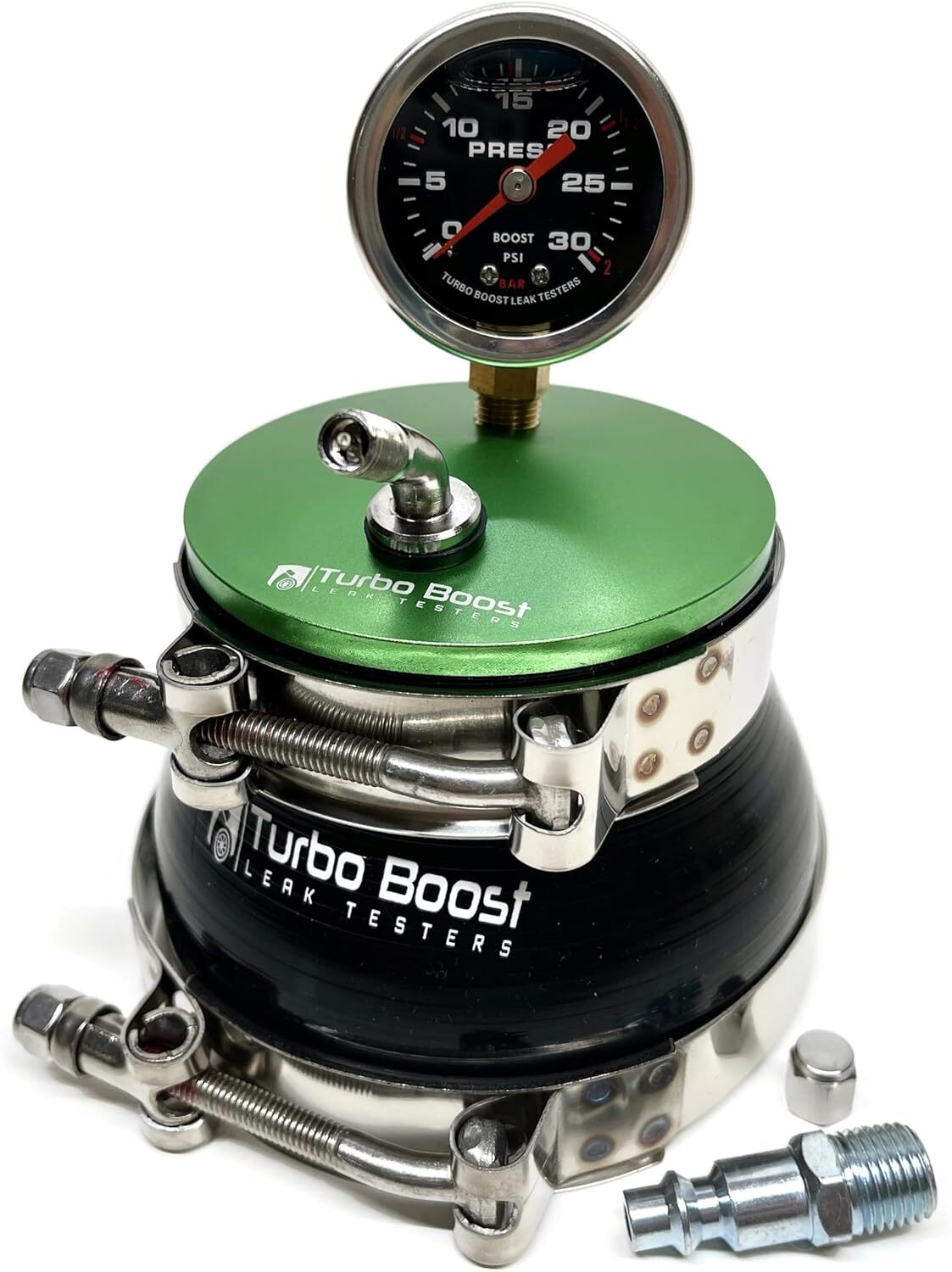
Your boost leak tester comes partially assembled. When connecting the silicone hose to the end cap, slide the silicone up to the top edge of the end cap and tighten the clamp down onto the end cap.
Rotating the boost gauge for better visibility — do not rotate or adjust the gauge by hand, it will damage it. Use a 7/16" or 11mm wrench at the base of the gauge to rotate.
T-bolt clamps — do not over tighten, as this could cause the clamp to fail and the tester to pop off under pressure. If you're not comfortable working with compressed air and pressurized components, please visit a shop or consult a professional.
Start with a low pressure on your compressor and work your way up. The largest leaks will be found first; fix them and retest to find the next smaller leak. Start at about 5 PSI, then work up toward whatever you normally boost when driving, but never past it.
Increase the pressure on your compressor outlet, but be cautious not to over-pressurize the charge pipes. The boost gauge on the tester will indicate the charge pipe pressure. Soapy spray can be used to identify smaller leaks that may be hard to hear.
There's a leak large enough, or something is disconnected. You do not need to cap off the other end. The charge pipes and engine will hold the pressure without it escaping through the engine into the exhaust.
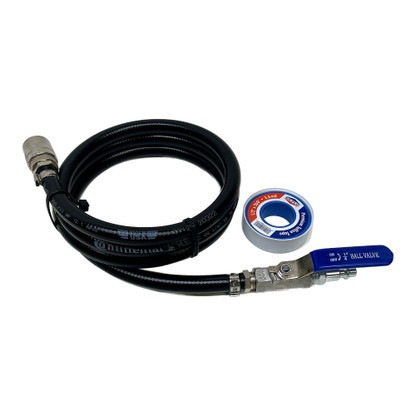
After fixing all obvious leaks, use the shut-off valve to keep pressure trapped in the system and evaluate how well it holds. About 1 PSI loss every second or two is normal. At higher pressure (e.g. 20 PSI) it will drop faster, then slow as it approaches 0 PSI.
Purge all the air first before removing the tester. Now enjoy making boost with confidence!
TURBO BOOST LEAK TESTERS, INC. and its directors, employees, and affiliates are not responsible for any injury, death, or property damage associated with the purchase and use of any product(s) purchased from Turbo Boost Leak Testers, Inc. The purchaser assumes sole responsibility for ensuring all safety precautions, restrictions, and warnings are followed, and for complying with all state, local, and federal laws. Purchase from Turbo Boost Leak Testers, Inc. constitutes understanding and acceptance of this disclaimer. When using compressed air, always wear approved ANSI safety glasses or goggles and stay clear of the line of fire. Be aware of other components on the engine that will be pressurized during testing. These may also explode and act as projectiles. Always set your air compressor to a low outlet pressure to avoid accidental overcharging, and do not exceed your vehicle's calibrated boost level. Always remove the oil cap to vent excess crankcase pressure. This prevents potential engine oil seal damage.