
A boost leak is one of the most common problems on any turbocharged vehicle, and one of the most overlooked. Your turbo can be working perfectly, but if pressurized air escapes before it reaches the engine, you lose power, fuel economy, and sometimes set a check engine light. The good news: boost leaks are usually easy and cheap to fix once you find them.
Here are the 7 most common signs you have a boost leak, and how to track it down.
1. Noticeable Loss of Power
The number one symptom. The car feels flat, sluggish, or slower than it used to, especially under hard acceleration. If the turbo can't build or hold its normal boost, the engine simply can't make the power it should.
2. Slow or Delayed Turbo Spool
If it takes longer for boost to come in, or you notice more lag than normal, air may be escaping from the system before pressure can build.
3. Check Engine Light: P0299 and Other Codes
A boost leak is one of the leading causes of the P0299 turbo underboost code. You may also see lean codes or airflow-related codes depending on your vehicle. If you're dealing with P0299, read our full guide: P0299 Code Fix: Turbo Underboost Causes, Symptoms & How to Fix It Fast.
4. Hissing or Whooshing Sound Under Boost
A leak often makes a hiss, whistle, or whoosh when you get into the throttle. It can be subtle, so listen with the windows down during acceleration.
5. Worse Fuel Economy
When the engine isn't getting the air it expects, it has to work harder to make the same power. Many drivers notice they're filling up more often before they notice anything else.
6. Rough Idle or Hesitation
Depending on where the leak is, it can affect how the engine meters air, leading to hesitation, stumbling, or an uneven idle.
7. Oil Residue Around Pipes and Couplers
Turbo systems carry a small amount of oil mist. An oily film around a coupler, clamp, or intercooler end tank is often a sign that air (and oil) is escaping at that spot.
Most Common Places Boost Leaks Happen
- Cracked or split silicone and rubber couplers
- Loose or worn-out hose clamps
- Intercooler end tanks and seams
- Throttle body and intake manifold gaskets
- Blow-off valve or diverter valve seals
- Vacuum and PCV lines connected to the intake
How to Find a Boost Leak Fast
Guessing and replacing parts gets expensive. The fastest, most reliable way to find a leak is to pressurize the intake system with a boost leak tester:
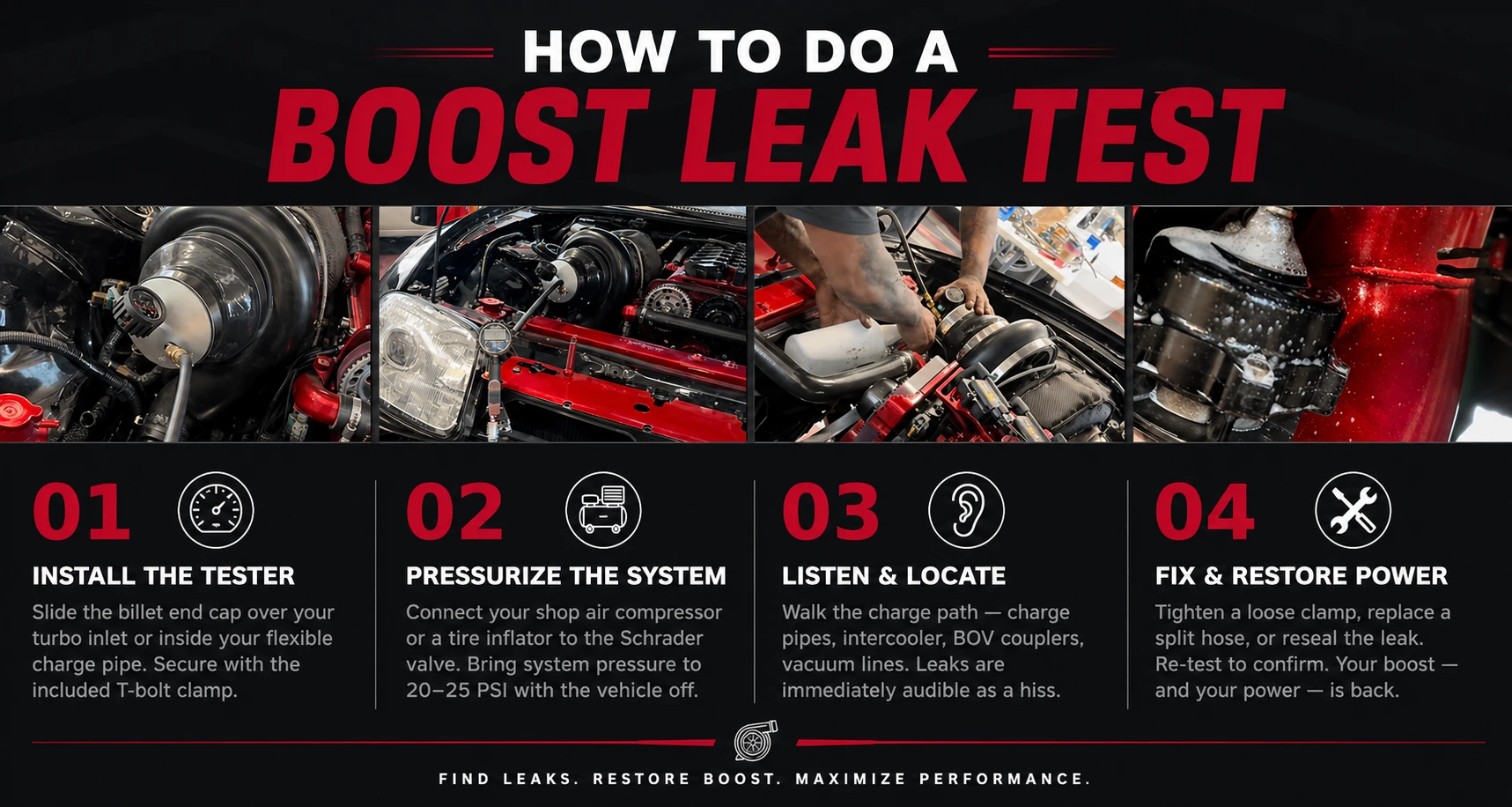
- Install the tester. Slide the billet end cap over your turbo inlet or inside your flexible charge pipe, and secure it with the included T-bolt clamp.
- Pressurize the system. With the vehicle off, connect your shop air compressor or a tire inflator to the Schrader valve and bring system pressure to 20–25 PSI.
- Listen and locate. Walk the charge path: charge pipes, intercooler, BOV couplers, and vacuum lines. Leaks are usually easy to hear as a hiss. For small leaks, spray soapy water on joints and look for bubbles.
- Fix and restore power. Tighten a loose clamp, replace a split hose, or reseal the leak, then re-test to confirm the system holds pressure.
Note: A small amount of air may escape through the engine itself if an intake valve is open. That's normal. You're looking for leaks at pipes, couplers, and connections.
For step-by-step instructions, visit our How To's & Instructions page.
Get the Right Tester for Your Vehicle
Our billet aluminum boost leak testers are built to last and available in sizes from 1.5" to 6", plus vehicle-specific kits for Subaru, Ford EcoBoost, VW, Audi, BMW, diesels, and many more.
Not sure which size you need? Contact us and we'll help you find the right fit. Same day shipping on in-stock orders.