Boost Leak Testing a BMW N54, N55, N20 or N26
BMW turbo engines each test a little differently. Where the tester goes depends on the engine, so start by checking which one you have: the N54 is the 3.0L twin turbo, the N55 is the 3.0L single twin-scroll turbo, and the N20 and N26 are the 2.0L four-cylinder turbo engines.
A boost leak makes the turbo spin faster to make up for lost pressure. That means more heat, more shaft play and eventually a damaged turbo. Common leak points on BMWs are the charge pipe and its clamps, the throttle body coupler, diverter valves, the intercooler end tanks and the intake manifold seals.
Before starting, read the How to Boost Leak Test guide. It covers the basics of pressurizing your engine safely. Always wear safety eyewear when working with compressed air, and never connect unregulated shop air straight to the tester.
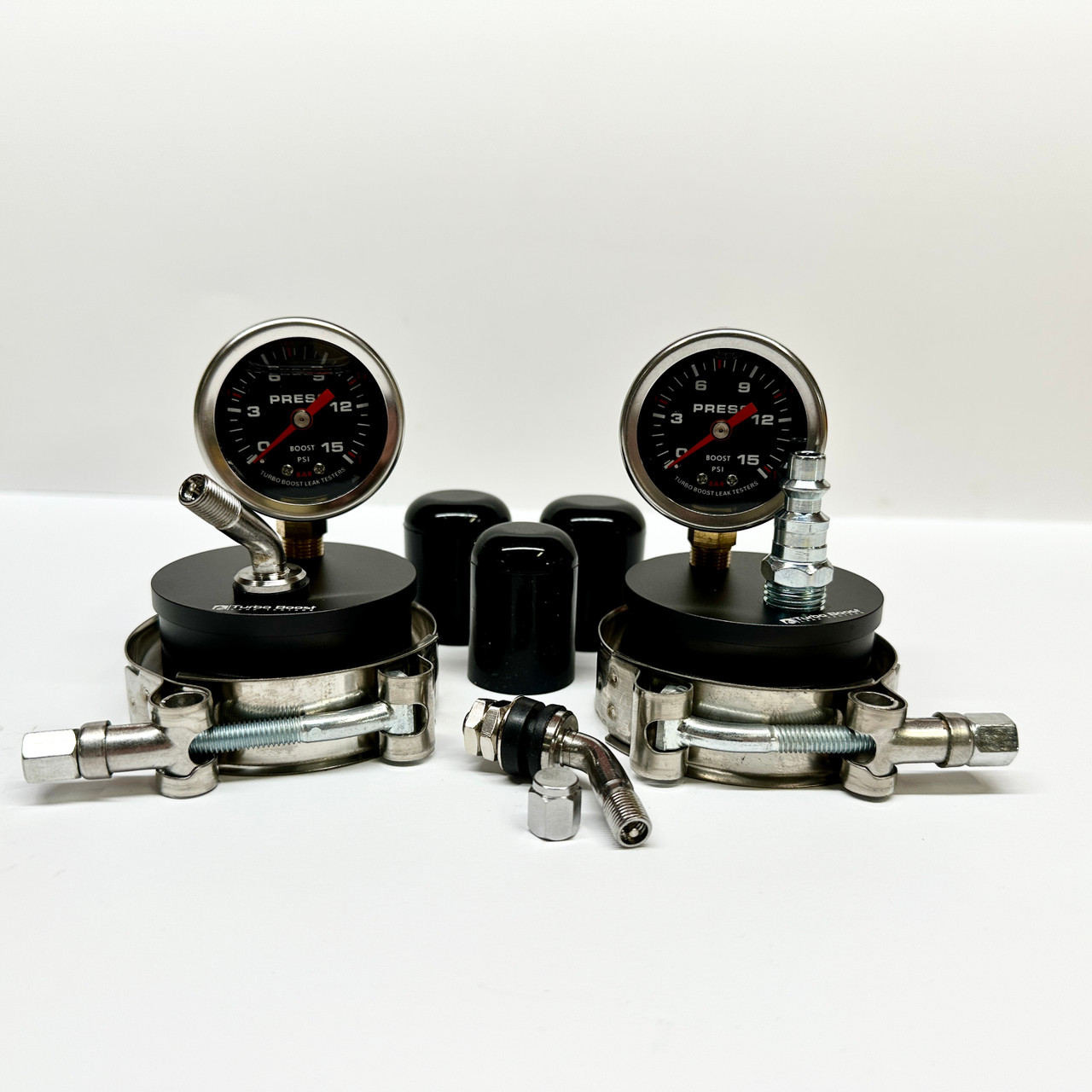
The N54 has two turbos, so the kit has two testers, and both must be installed at the same time. If you only cap one side, air simply vents out through the other turbo and you won't build pressure.
1. Remove the airbox (or your aftermarket filters) to expose the two flexible intake hoses that feed the turbos.
2. Install a tester inside each intake hose and tighten the T-bolt clamps.
3. Cap the diverter valve return flanges on the intake pipes and the breather line at the back of the valve cover with the included caps.
4. Fill through the tire valve on the tester. Both gauges should read the same pressure.
Normal noise: at around 12 PSI you may hear a hiss from the O-ring where the intake pipe seals to the turbo inlet. Those O-rings are not built to hold boost, so this is not a boost leak. If that's the only noise, lower the pressure a little and keep checking everything else.
Running MMP inlets? Use the matching kit: the MMP relocated inlet tester mounts on the 2.5" aluminum or silicone MMP inlets, and there's a separate tester for MMP stock location inlets. The N54 head also lets some boost into the valve cover through small ports, so plug the crankcase vent on the back of the valve cover (cap included). This is required if you run a catch can that's open to the air.

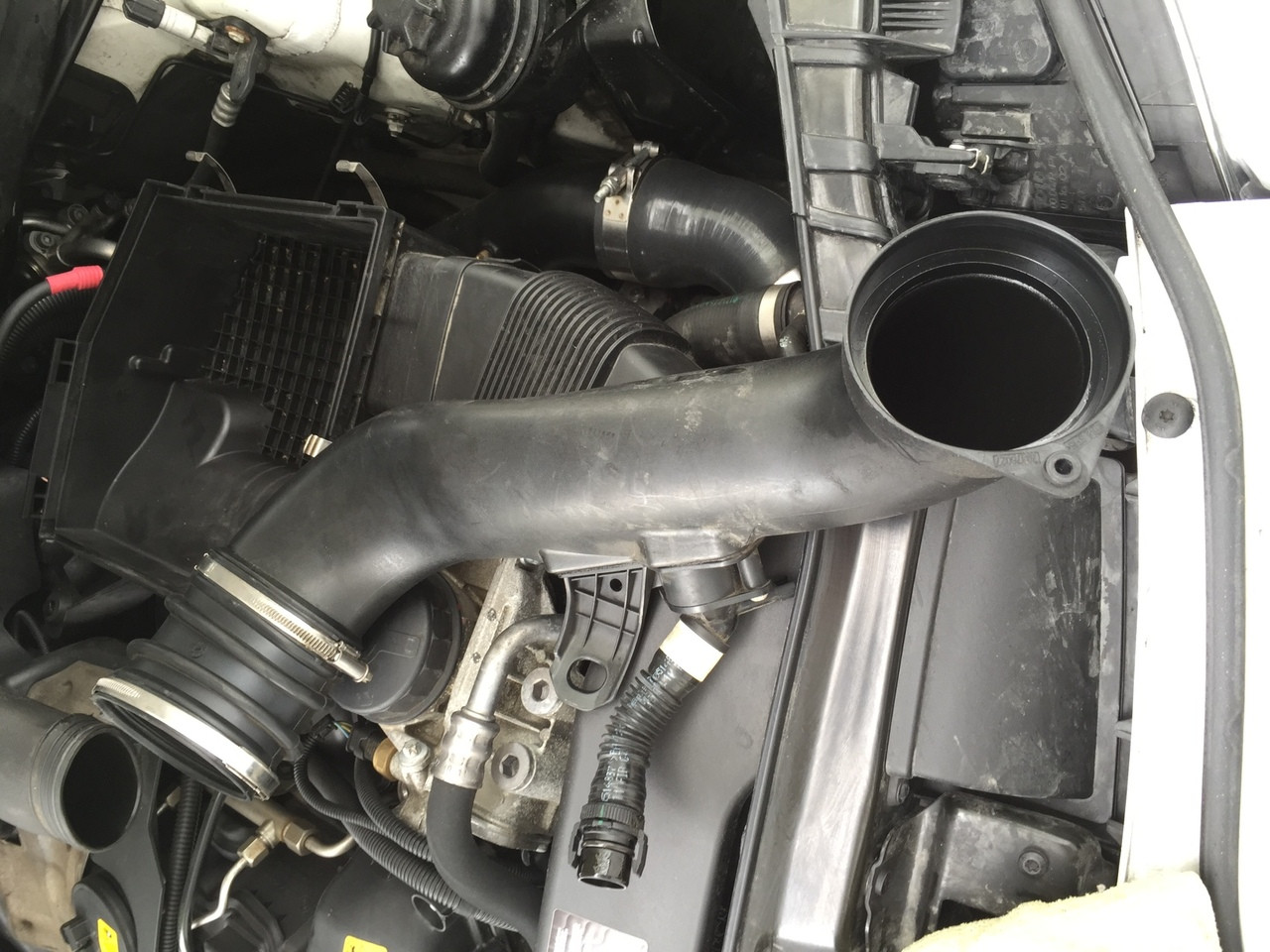
1. Remove the intake pipe between the airbox and the turbo inlet pipe.
2. Install the tester onto the turbo inlet pipe (#14 in the diagram, BMW part number 13717599290 on the E90 335i).
3. Remove the oil cap to relieve pressure from the crankcase.
4. Fill the system starting at 5 PSI, then work up to 10 and 15 PSI.
Do not go past 20 PSI on the N55. Testing here pressurizes everything the turbo normally pressurizes: charge pipe, intercooler, throttle body, intake manifold and diverter valve.
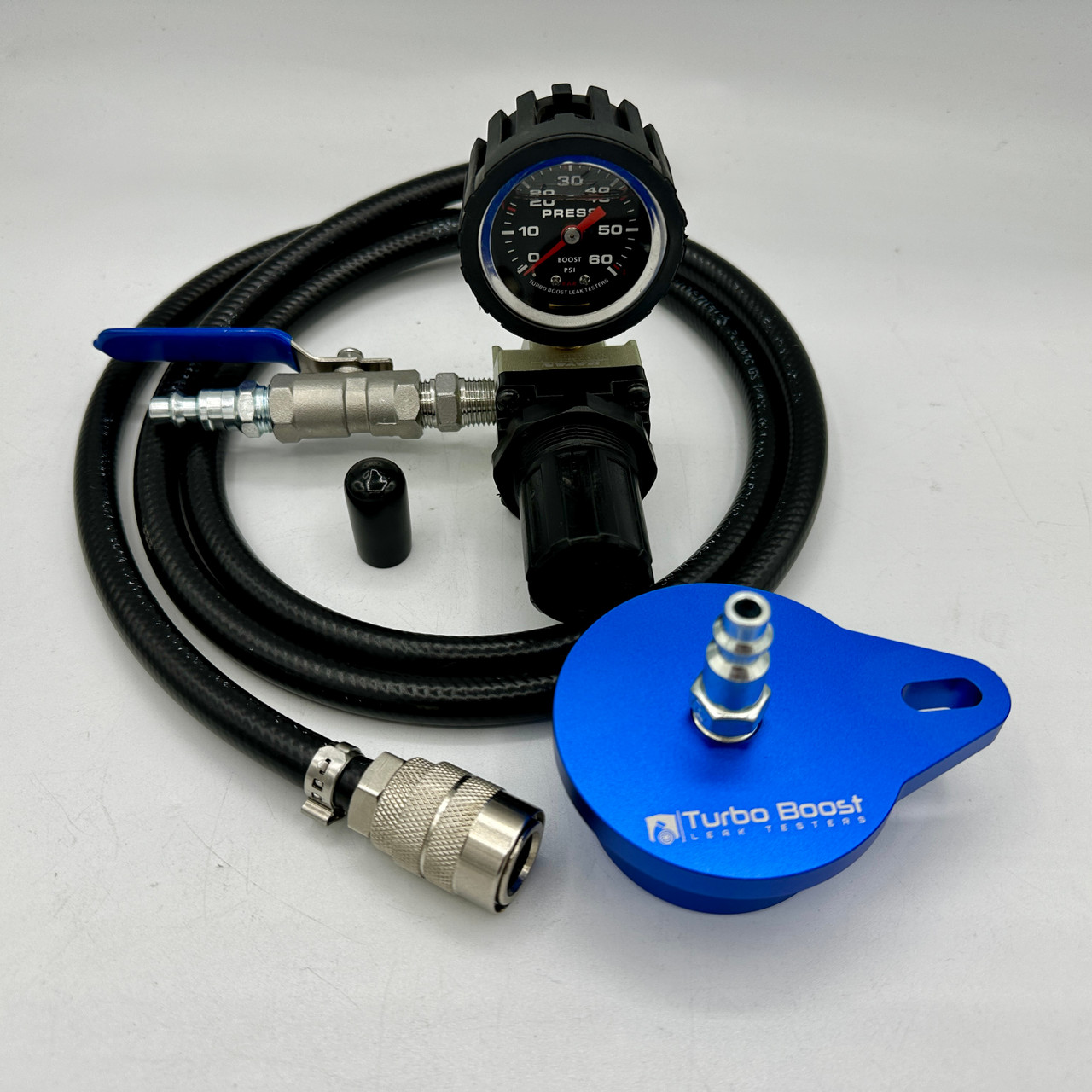
On the N20 and N26 the turbo sits between the engine and the frame rail, so the kit uses a billet adapter that bolts straight onto the turbo inlet, with an extension hose, shut-off valve and 30 PSI gauge so you can fill and read pressure from outside the engine bay.
Testing right at the turbo means you don't push air through the fragile PCV system. Start at 5 PSI and do not go past 20 PSI.
With the system at test pressure, close the valve or remove the inflator and watch the gauge. Losing about 1 PSI per second or slower is normal. Faster than that means you have a leak.
Listen for hissing, then spray soapy water on clamps, couplers and joints. Bubbles show you exactly where it's leaking. Fix the biggest leak first (it's usually the loudest), then test again. Repeat until the decay rate is normal.
Once it holds, refit the intake and oil cap and drive with confidence that the turbo is making full boost safely.
Not sure which kit fits? Text us at 248-403-8512